




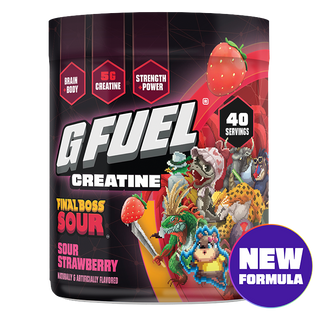


Creatine is one of the most researched supplements in sports nutrition history, and the science is unusually clear: creatine monohydrate supports muscle strength, power output, and recovery when paired with resistance training, and emerging research shows it may also support brain function under high-demand conditions. The Cleveland Clinic describes creatine as a natural source of energy that helps skeletal muscles contract by maintaining a steady supply of ATP (adenosine triphosphate), the molecule your cells burn for fuel.
About half of your body's creatine comes from food, primarily red meat, fish, and dairy. The other half is produced naturally by your liver, kidneys, and pancreas. Roughly 95% of creatine is stored in skeletal muscle, with the remaining 5% distributed across your heart, brain, and other tissues. Supplementing adds to those stores, which is where the performance and cognitive benefits come from.
The full guide below covers what creatine actually does at the cellular level, the verified benefits, the real side effects, safety considerations, and how creatine fits into a broader supplement routine alongside products like energy formulas and protein powders.
How Does Creatine Work?
Creatine works by recycling your body's primary energy currency: ATP. When your muscles contract during a heavy lift, a sprint, or a fast-twitch gaming reflex, ATP is broken down into ADP (adenosine diphosphate), releasing energy. Your muscles store creatine as phosphocreatine, which donates a phosphate group back to ADP, regenerating it into usable ATP. The faster this ATP recycling happens, the longer your muscles can sustain high-intensity effort before fatigue sets in.
Without supplementation, your phosphocreatine stores are only about 60 to 80% full. Supplementing with creatine monohydrate increases those stores toward full capacity, giving your muscles a deeper energy reserve for short, explosive efforts like heavy sets, sprints, and the rapid motor responses that competitive gaming demands. The International Society of Sports Nutrition (ISSN) considers creatine monohydrate the most effective ergogenic nutritional supplement currently available for increasing high-intensity exercise capacity and lean body mass.
The brain also uses the creatine-phosphocreatine system. Neurons fire rapidly during cognitively demanding tasks, burning through ATP at a rate disproportionate to the brain's small size (the brain accounts for roughly 2% of body weight but consumes about 20% of total energy). Research published in Frontiers in Nutrition found that creatine supplementation may improve cognitive performance by increasing brain energy reserves and reducing oxidative stress, particularly during high-demand tasks.
Verified Benefits of Creatine
Supports Strength and Power Output
The most well-documented benefit. Creatine supplementation combined with resistance training consistently increases one-rep max strength and peak power output across dozens of studies. The NSCA confirms that creatine supplementation during training can increase gains in 1-repetition maximum (1RM) strength and power. The effect is most pronounced in short-duration, high-intensity movements: heavy squats, bench press, deadlifts, and explosive sprints.
Supports Muscle Growth
Creatine supports muscle growth through multiple pathways. The Cleveland Clinic explains that creatine helps activate satellite cells in muscles, which repair the micro-tears training creates. Creatine also draws water into muscle cells (cell volumization), which may stimulate protein synthesis. Studies show that regularly taking creatine alongside weightlifting and exercise can help increase muscle growth in adults aged 18 to 30. Our guide on whether creatine supports muscle building covers the full research.
Supports Recovery
Creatine accelerates the repair process between sessions by supporting satellite cell activation and reducing exercise-induced muscle damage markers. Faster recovery means you can train again sooner at full capacity, which compounds over weeks and months into meaningful strength and size gains. For a deeper look at how supplements support recovery, our guide on energy drinks and muscle recovery covers the broader picture.
May Support Brain Function
Emerging research shows creatine supplementation may improve working memory, processing speed, and reasoning, particularly under conditions of stress, sleep deprivation, or sustained cognitive load. A 2024 systematic review and meta-analysis published in Frontiers in Nutrition found that creatine supplementation had favorable effects on multiple cognitive domains including memory, executive function, and information processing speed. A 2025 pilot study from the University of Novi Sad found that creatine combined with guanidinoacetic acid (GAA) improved in-game esports performance and standardized cognitive test scores for reaction time, accuracy, and executive control.
The brain-performance angle matters for gamers and creators who sit through 4-to-8-hour sessions where focus, reaction speed, and decision-making degrade over time. A 40-serving Energy Formula tub at 140mg caffeine supports the alertness side of long sessions, and creatine may complement that by supporting the cellular energy side, the ATP reserves that keep neurons firing cleanly under sustained cognitive load.
Who Uses Creatine?
Creatine is used across a wide range of populations, not just bodybuilders.
Power sport athletes (weightlifters, football players, hockey players, wrestlers) use creatine for strength and explosive power gains. The International Olympic Committee (IOC), NCAA, and all major professional sports organizations allow creatine use.
Endurance athletes use creatine to support repeated sprint ability during interval-heavy training, though endurance performance during low-intensity steady-state exercise is not affected by creatine.
Gamers and esports competitors are increasingly interested in creatine for its potential cognitive benefits, specifically reaction time and sustained mental performance during long sessions. Our guide on the best gaming supplements covers the full landscape.
Older adults (60+) may benefit from creatine's effects on brain function, including short-term memory, reasoning, and neuroprotection. The Cleveland Clinic notes that researchers are still studying whether creatine supplements may help people with cognitive conditions, including dementia.
Creatine Safety: What the Research Says
Creatine monohydrate has an extensive safety record. The ISSN position stand, based on hundreds of studies, concludes that creatine monohydrate is safe for healthy adults when taken at recommended doses (3 to 5 grams per day for maintenance). The Cleveland Clinic confirms that studies show it is safe for many people to take creatine supplements.
However, safety is not universal. Talk to a healthcare provider before taking creatine if you are pregnant or breastfeeding, have diabetes, have kidney disease, have liver disease, or have bipolar disorder (creatine may increase the risk of mania in individuals with bipolar disorder).
Creatine is a dietary supplement and is not evaluated by the FDA for safety or effectiveness before reaching the market. Choose products that carry third-party testing certifications (NSF International, Informed Sport, or USP Verified) to confirm label accuracy and purity.
Side Effects of Creatine
Most reported side effects are mild and manageable.
Water Retention and Weight Gain
Creatine draws water into muscle cells, which can increase body weight by 1 to 3 kg during the first week of supplementation (especially during a loading phase). The weight is water, not fat. Once the loading phase ends or the body adjusts, water retention stabilizes. Our guide on whether creatine causes weight gain covers this in detail.
Digestive Discomfort
Some users experience stomach upset, bloating, or cramping, especially at higher doses (above 10g in a single serving). Splitting doses across the day (four 5g servings instead of one 20g serving) and taking creatine with food reduces digestive issues for most people.
Dehydration Myth
Creatine does not cause dehydration. The belief persists because creatine pulls water into muscle cells, but this does not deplete systemic hydration. Multiple studies have found no increase in dehydration or heat illness risk from creatine supplementation. That said, staying hydrated is always important during exercise. A caffeine-free Hydration Formula with electrolytes supports fluid balance without adding stimulation.
What Creatine Does Not Do
Creatine does not cause kidney damage in healthy individuals. The Cleveland Clinic notes that people with kidney disease should avoid creatine, but for people with healthy kidneys, creatine supplementation at recommended doses has not been shown to impair kidney function. Creatine does not cause hair loss. A single study linked creatine to increased DHT levels, but subsequent research has not replicated the finding, and no direct evidence links creatine to hair loss.
How to Take Creatine
The standard approach: 3 to 5 grams of creatine monohydrate per day, every day, with or without a loading phase. Creatine monohydrate is the most researched form and the only form with robust evidence behind it. Other forms (creatine hydrochloride, buffered creatine, creatine ethyl ester) have not been shown to outperform monohydrate.
Take creatine at any time of day. Timing is less important than consistency. Mix with water, juice, or a shake. Taking creatine with a carb or protein source may slightly improve absorption, but the difference is small. The most important factor is daily consistency: creatine works through saturation, not acute dosing. Our guides on how much creatine to take per day and when to take creatine cover the dosing and timing details.
Build the Stack That Fits Your Grind
Creatine works best as part of a broader routine: consistent training, adequate protein (1.6 to 2.2g per kg of body weight daily), proper hydration, and clean energy to power the sessions themselves. A scoop of a clean energy formula before training provides 140mg caffeine and focus aminos to support session quality. A Hydration Formula on the side keeps fluid and electrolyte balance steady. And an Energy + Protein shake after training covers the recovery window. Creatine fits alongside all of these, not as a replacement for any of them.
Frequently Asked Questions
Q. What does creatine do?
Creatine increases your muscles' phosphocreatine stores, which regenerate ATP (the energy molecule cells use during high-intensity activity). The result is improved strength, power output, and recovery during resistance training, plus emerging evidence for cognitive performance benefits under high-demand conditions.
Q. Is creatine safe?
Creatine monohydrate is safe for most healthy adults at the recommended dose of 3 to 5 grams per day, supported by hundreds of studies and the ISSN position stand. People with kidney disease, liver disease, diabetes, or bipolar disorder should consult a healthcare provider before taking creatine.
Q. Does creatine cause kidney damage?
No, in healthy individuals. Creatine supplementation at recommended doses has not been shown to impair kidney function. People with pre-existing kidney disease should avoid creatine and consult a healthcare provider.
Q. Does creatine cause hair loss?
No direct evidence links creatine to hair loss. A single study found increased DHT levels with creatine use, but subsequent research has not replicated the finding, and no study has demonstrated a causal link between creatine and hair loss.
Q. Is creatine a steroid?
No. Creatine is a naturally occurring compound made from amino acids (arginine, glycine, and methionine). Your body produces creatine on its own, and you consume it through meat, fish, and dairy. Creatine is legal, allowed by all major sports organizations, and has no hormonal mechanism similar to anabolic steroids.
Q. Should gamers take creatine?
Emerging research suggests creatine may support cognitive performance, reaction time, and sustained mental energy during high-demand tasks. A 2025 pilot study found improvements in esports performance markers when creatine was combined with GAA. Gamers interested in cognitive supplementation should consider creatine alongside their existing energy and hydration routine.