






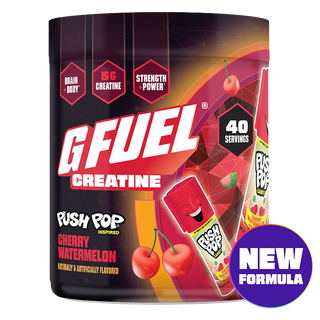
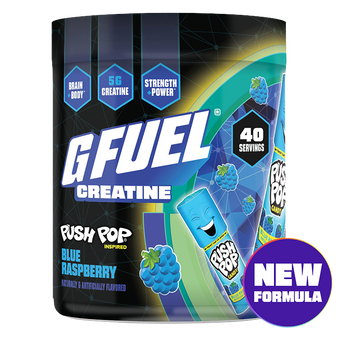
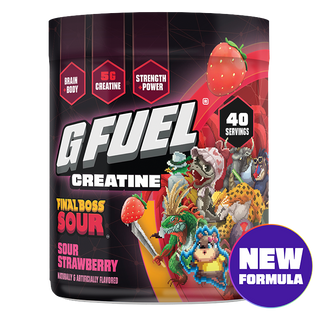


Creatine supports muscle growth, but not in the way most people assume. Creatine does not directly build muscle the way protein does. What creatine does is amplify your ability to train harder, recover faster, and maintain the intensity that drives muscle growth over time. The Cleveland Clinic confirms that regularly taking creatine alongside weightlifting and exercise can help increase muscle growth in adults aged 18 to 30, and UCLA Health describes creatine as a supplement that can help build muscle mass when paired with resistance training.
The distinction matters because creatine without training produces minimal results. Creatine is not a passive muscle-building supplement you swallow and wait. Creatine is a performance amplifier that makes each training session count more, and the cumulative effect of better sessions over weeks and months is what produces the visible muscle growth.
The full guide below covers the specific mechanisms through which creatine supports muscle growth, what the research actually shows, the limits of what creatine can do alone, and how to stack creatine with training and nutrition for the best results.
How Creatine Supports Muscle Growth
Creatine contributes to muscle growth through four interconnected pathways, each verified by peer-reviewed research.
1. Increased Training Volume
The most powerful mechanism. Faster ATP replenishment during high-intensity sets allows you to push more reps, complete more sets, and sustain heavier loads before fatigue forces you to stop. More total volume per session is one of the strongest predictors of long-term muscle growth in resistance training research. If creatine lets you perform 3 extra reps across 4 sets on a compound lift, that additional volume compounds across every training session for months.
2. Cell Volumization
Creatine draws water into muscle cells, increasing cell volume. Cell volumization is not just cosmetic. Research suggests that increased intracellular water signals protein synthesis pathways and reduces protein breakdown, creating a more anabolic environment within the muscle fiber. The "full" feeling in muscles during the first weeks of creatine supplementation is partly this effect, and it contributes to both the short-term visual size increase and the long-term growth stimulus.
3. Satellite Cell Activation
The Cleveland Clinic explains that creatine helps activate satellite cells in muscles. Satellite cells are the repair units that respond to the micro-tears resistance training creates in muscle fibers. When satellite cells activate, they fuse with damaged fibers and contribute new nuclei, which increases the muscle's capacity for growth. Faster satellite cell activation means faster repair, which means you can train again sooner at full capacity.
4. Hormonal Support
Creatine supplementation has been associated with increases in anabolic hormones, including insulin-like growth factor 1 (IGF-1), which contributes to muscle growth and tissue repair. The hormonal effect is modest compared to the training volume and cell volumization pathways, but it adds another layer to the overall growth stimulus.
What the Research Shows
The scientific evidence for creatine and muscle growth is robust and consistent.
A meta-analysis of 22 studies found that creatine supplementation combined with resistance training produced significantly greater increases in lean body mass compared to resistance training with placebo. The average additional lean mass gain with creatine ranged from 0.9 to 1.7 kilograms over 4 to 12 weeks of training.
The Cleveland Clinic specifically states that studies show regularly taking creatine alongside weightlifting and exercise can help increase muscle growth in people aged 18 to 30.
UCLA Health confirms that creatine supplements can help build muscle mass and describes it as one of the most effective supplements for improving high-intensity performance.
The ISSN position stand considers creatine monohydrate the most effective ergogenic nutritional supplement available for increasing high-intensity exercise capacity and lean body mass during training.
The 2025 UNSW Nuance
A 2025 trial from UNSW (Desai et al.) introduced an important nuance. After controlling for water retention with a one-week wash-in phase, the study found that 5 grams of creatine per day did not produce statistically significant lean mass gains beyond what resistance training alone delivered over 12 weeks. The lead researcher suggested that higher doses (10 grams per day) may be necessary for hypertrophy-specific goals.
The finding does not invalidate the decades of prior research supporting creatine for muscle growth. Rather, it highlights that separating water-driven weight from actual muscle tissue requires careful study design, and that the standard 5-gram dose may primarily benefit muscle growth indirectly (through better training capacity) rather than through a direct anabolic effect. For most people, the indirect pathway, train harder over time, is the one that matters.
What Creatine Cannot Do Alone
Creatine without resistance training produces minimal muscle growth. The supplement amplifies the stimulus of training, but without the stimulus itself, there is little to amplify. A sedentary person taking 5 grams of creatine daily without exercising will not build meaningful muscle.
Creatine does not replace protein. Protein provides the amino acids that physically construct new muscle tissue. Creatine provides the energy that fuels the training sessions that create the growth stimulus. Both are necessary. Daily protein intake of 1.6 to 2.2 grams per kilogram of body weight, combined with 3 to 5 grams of creatine, covers both the building material and the energy substrate. Our guide on the best protein powder covers how to choose the right protein source, and the Energy + Protein formula combines 15g whey protein with 140mg caffeine for sessions where both needs overlap.
Creatine does not eliminate the need for progressive overload. Muscle growth requires progressively challenging your muscles with increasing weight, reps, or volume over time. Creatine supports the ability to progress, but the actual programming must come from you.
How to Use Creatine for Muscle Growth
Dosing
3 to 5 grams of creatine monohydrate per day, every day, including rest days. An optional loading phase (20 to 25 grams per day for 5 to 7 days) saturates stores faster but is not required. Both approaches reach the same endpoint. Our guide on how much creatine to take per day covers the full dosing framework.
Training
Progressive resistance training 3 to 5 days per week, emphasizing compound movements (squat, bench press, deadlift, overhead press, rows) with progressive overload. Creatine benefits are most pronounced during sets of 1 to 10 reps at moderate to heavy loads, the rep range most strongly associated with muscle growth.
Nutrition
Adequate protein (1.6 to 2.2 grams per kilogram daily), sufficient calories to support growth (a modest caloric surplus of 200 to 500 calories above maintenance), and balanced macronutrients. Creatine amplifies the effect of training, but training without adequate nutrition limits what both creatine and effort can produce.
Hydration
Creatine draws water into muscle cells, which increases the body's water demand. Drink plenty of water throughout the day. A caffeine-free Hydration Formula with electrolytes supports cellular fluid balance without adding stimulation, which is especially useful on rest and recovery days. Our guide on what to drink during a workout covers the hydration side of training.
Does Creatine Work for Women?
Yes. The Cleveland Clinic notes that both men and women report benefits from creatine supplementation. Some studies suggest that women may not gain as much absolute strength or muscle mass as men, but the relative improvement in training capacity, recovery, and body composition is meaningful across both groups. Women naturally produce less creatine than men and consume less through diet (particularly women who eat less red meat), which means supplementation can produce a proportionally larger increase in baseline creatine stores.
Build Stronger, Recover Faster
Creatine does not replace training. Creatine makes training better. More reps, heavier loads, faster recovery, and a cellular environment that supports growth across every session. Stack creatine with a clean energy formula for pre-session alertness and a classic flavor on the desk. Rotate in a new arrival when the lineup starts to feel stale, and let the compound effect of consistent creatine, consistent training, and clean fuel carry your progress forward.
Frequently Asked Questions
Q. Does creatine actually build muscle?
Creatine supports muscle growth indirectly by increasing training capacity (more reps, heavier loads), enhancing cell volumization, activating satellite cells for faster repair, and supporting anabolic hormone levels. Creatine paired with resistance training produces greater lean mass gains than training alone.
Q. How long does creatine take to build muscle?
Measurable strength improvements appear within 2 to 4 weeks of reaching full creatine saturation. Visible muscle growth follows over 8 to 12 weeks of consistent training and creatine supplementation, depending on training intensity, nutrition, and individual genetics.
Does creatine work without exercise?
Minimal results. Creatine amplifies the growth stimulus of resistance training. Without the stimulus, there is little to amplify. Sedentary individuals taking creatine will not build meaningful muscle mass.
Q. Can women take creatine for muscle growth?
Yes. Both men and women benefit from creatine supplementation. Women naturally produce less creatine and consume less through diet, which means supplementation can produce proportionally larger relative improvements in training capacity and body composition.
Q. Should I take creatine and protein together?
Yes. Creatine and protein serve different functions. Protein provides the amino acids that build muscle tissue. Creatine provides the energy that fuels the training sessions creating the growth stimulus. Taking both alongside a progressive training program is the strongest approach.
Q. Does creatine cause bloating?
Creatine draws water into muscle cells, which can cause mild bloating or a "fuller" feeling during the first 1 to 2 weeks of supplementation. The effect is typically water retention in muscle tissue (not fat gain) and stabilizes as your body adjusts. Splitting doses across the day and staying well-hydrated reduces bloating for most people.