


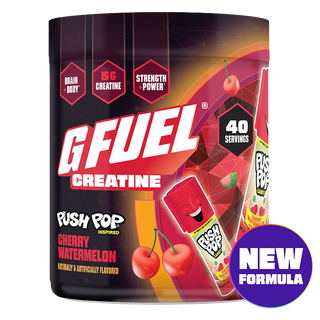
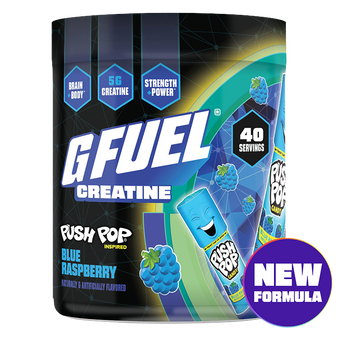
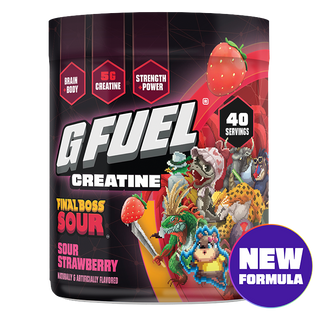


Creatine is best known for making muscles stronger. What most gamers do not know is that the brain runs on the same energy system. Neurons fire by burning ATP (adenosine triphosphate), and phosphocreatine in the brain regenerates that ATP the same way it does in muscle cells. The brain accounts for roughly 2% of body weight but consumes about 20% of the body's total energy output, making it one of the most energy-hungry organs in the body. When cognitive demand spikes during a clutch round, a teamfight, or a split-second callout, the brain's ability to regenerate ATP fast enough directly affects how quickly and accurately you process information.
Emerging research suggests that supplementing creatine can increase brain creatine levels and support cognitive performance under high-demand conditions. A 2024 systematic review and meta-analysis published in Frontiers in Nutrition found favorable effects on memory, executive function, attention, and information processing speed. A 2025 pilot study from the University of Novi Sad found that creatine combined with guanidinoacetic acid (GAA) improved in-game esports performance and standardized cognitive test scores for reaction time, accuracy, and executive control.
The research is early but directionally strong. The full guide below covers how creatine works in the brain, what the esports-specific studies show, who benefits most, practical dosing for gamers, and how creatine stacks alongside the energy and hydration supplements already in most gaming routines.
How Creatine Works in the Brain
The brain uses the phosphocreatine-ATP system for the same reason muscles do: rapid energy regeneration. When a neuron fires, it burns ATP. Phosphocreatine donates a phosphate group to regenerate ATP from ADP, keeping the neuron ready to fire again. The faster this cycle runs, the more efficiently the brain sustains rapid processing during complex, high-demand tasks.
Creatine supplementation increases brain creatine levels, though the brain takes up creatine more slowly than skeletal muscle due to limited transport capacity across the blood-brain barrier. Research from Frontiers in Nutrition suggests that supplementation may improve cognitive performance by increasing cellular energy reserves and reducing oxidative stress, which is particularly important during tasks requiring high cognitive processing.
For gamers, the practical implication is straightforward: the same supplement that helps muscles push one more rep may help neurons process one more decision per second under pressure. The effect is subtle compared to caffeine's obvious alertness boost, but the mechanism is distinct and complementary.
What the Esports Research Shows
The 2025 University of Novi Sad Pilot Study
Researchers at the University of Novi Sad's Applied Bioenergetics Lab conducted a pilot study evaluating creatine combined with GAA (guanidinoacetic acid, which aids creatine transport to the brain) on esports performance. The combination improved in-game performance metrics and standardized cognitive test scores assessing reaction time, accuracy, and executive control.
Lead researcher Dr. Sergej Ostojic noted that the combination of supplements could be similarly effective in other games that heavily depend on these cognitive functions, though further research is needed to confirm broader applicability. The study was published via NutraIngredients in May 2025.
The Frontiers in Nutrition Meta-Analysis (2024)
A systematic review with meta-analysis published in Frontiers in Nutrition investigated the effects of creatine monohydrate supplementation on cognitive function across multiple studies. The findings showed favorable effects across several cognitive domains, including memory, executive function, attention, and information processing speed.
The researchers noted that creatine may enhance cognitive function through multiple mechanisms: increasing brain energy supply, regulating neurotransmitter levels, and improving neuronal function. The review acknowledged heterogeneity across study designs and small sample sizes, recommending larger, more standardized future trials.
The Rae et al. Study (2003)
One of the foundational studies on creatine and cognition. Rae et al. tested creatine supplementation in 45 young vegetarian adults and found a large, statistically significant improvement in both working memory (Backwards Digit Span) and abstract reasoning (Raven's Advanced Progressive Matrices). The effect was particularly strong because vegetarians start with lower baseline brain creatine levels, meaning supplementation produced a proportionally larger increase.
The finding has been replicated and expanded in subsequent research, with the largest controlled study to date (cross-over, double-blind, placebo-controlled, 5 grams daily for 6 weeks) confirming the direction of the effect.
What Creatine Can Do for Gamers
Based on the available research, creatine may support several cognitive functions relevant to gaming performance.
Reaction Time
The brain's speed of processing depends on how quickly neurons can fire and reset. Creatine's ATP-regeneration support may reduce the gap between perceiving a threat and executing a response, the millisecond-level difference that separates a successful clutch from a missed shot. The Novi Sad pilot study specifically measured reaction time improvement in esports contexts.
Sustained Focus During Long Sessions
Gaming sessions routinely stretch beyond 3 to 4 hours for ranked play, tournament practice, and content creation. Cognitive fatigue accumulates as the brain's ATP reserves deplete, leading to slower decision-making, missed callouts, and reduced map awareness in the late rounds. Creatine may help maintain cognitive energy reserves deeper into a session, reducing the performance decay that typically hits after hour 2 to 3. Our guide on staying focused during long gaming sessions covers the full picture of sustained performance.
Working Memory Under Pressure
Working memory is the cognitive system that tracks multiple pieces of information simultaneously: enemy positions, cooldown timers, teammate locations, economy status. Higher working memory capacity under pressure translates directly to better in-game decision-making. The Rae et al. study found significant working memory improvements with creatine, and subsequent research has supported this finding across different populations.
Sleep-Deprived Performance
Several studies have found that creatine supplementation reduces the cognitive decline associated with sleep deprivation. For gamers who play late-night ranked sessions, attend multi-day tournaments, or simply run on less-than-optimal sleep, creatine may blunt the worst of the focus and reaction time penalties that come with fatigue.
Who Benefits Most?
Creatine's cognitive effects are strongest in populations with lower baseline brain creatine levels.
Vegetarians and vegans consume almost no dietary creatine (found primarily in meat and fish), so supplementation produces a proportionally larger increase in brain creatine stores. Research consistently shows that non-meat-eaters experience greater cognitive benefits from creatine supplementation than omnivores.
Sleep-deprived individuals show more pronounced cognitive improvement with creatine because the brain's energy demand is already strained. Creatine does not replace sleep, but it may reduce the cognitive cost of a poor night.
Gamers and creators who sustain high cognitive load for hours at a time are in a structurally similar position to athletes who sustain physical load. The brain under sustained demand depletes ATP reserves the same way muscles do, and creatine supports the replenishment process in both contexts.
Older adults (60+) show favorable cognitive responses to creatine supplementation, with the Cleveland Clinic noting ongoing research into creatine's potential for neuroprotection and cognitive support in aging populations.
How to Take Creatine as a Gamer
The dosing protocol is the same as for athletic use: 3 to 5 grams of creatine monohydrate daily, every day, with or without a loading phase. Cognitive benefits emerge more slowly than strength benefits because creatine crosses the blood-brain barrier at a limited rate. Expect 4 to 8 weeks of consistent supplementation before cognitive effects become noticeable, though individual timelines vary.
Practical Stacking for Gamers
The strongest gaming supplementation routine covers three pillars.
Alertness and focus: a scoop of Energy Formula at 140mg caffeine and focus aminos (including L-Tyrosine and L-Theanine) before a session. Handles the immediate, felt energy and sharpness. Caffeine works within 15 to 45 minutes and lasts 4 to 6 hours.
Brain energy reserves: 3 to 5 grams of creatine monohydrate daily, at any time. Handles the cellular energy substrate that keeps neurons processing cleanly under sustained cognitive load. Creatine works through saturation over weeks, not acute dosing.
Hydration: a caffeine-free Hydration Formula with electrolytes during or between sessions. Dehydration impairs cognitive function before noticeable symptoms appear. Hydration supports both the brain and the muscles that creatine and caffeine are fueling.
Mix creatine into whichever drink you are already having. Energy Formula, Hydration Formula, protein shake, or plain water all work. The key is daily consistency, not format. Our guide on nootropics in gaming energy drinks covers how cognitive-support ingredients stack alongside creatine.
What Creatine Does Not Do for Gaming
Creatine is not caffeine. You will not feel more awake or more alert from creatine. The cognitive benefit is subtle: slightly faster processing, slightly longer sustained focus, slightly better working memory under pressure. The "felt" energy and motivation come from caffeine and a well-designed energy formula, not from creatine.
Creatine does not replace sleep, nutrition, or practice. No supplement compensates for 4 hours of sleep, an empty stomach, or skipping warm-up routines. Creatine adds a layer of support on top of the fundamentals, not a replacement for them.
Creatine does not produce instant gaming improvement. Unlike caffeine, which works within minutes, creatine requires weeks of daily supplementation to saturate brain and muscle stores. Patience and consistency are required.
Play Longer, Process Faster
The research on creatine and cognitive performance is still maturing, but the direction is clear: creatine supports brain energy in the same way it supports muscle energy, and gamers who sustain high cognitive load for hours at a time are exactly the population that stands to benefit. A scoop of a clean energy formula handles the alertness. Creatine handles the cellular fuel underneath. Keep a classic flavor on the desk for the daily grind and rotate in a new arrival when the routine starts to feel stale. Stack smart, stay consistent, and let the compound effect of weeks and months carry your ranked performance forward.
Frequently Asked Questions
Q. Does creatine help with gaming?
Emerging research suggests creatine may support cognitive functions relevant to gaming, including reaction time, sustained focus, and working memory under pressure. A 2025 esports pilot study found measurable improvements in in-game performance and cognitive test scores with creatine and GAA supplementation.
Q. Does creatine improve reaction time?
Studies suggest creatine may support faster information processing speed and reaction time by helping neurons regenerate ATP more efficiently. The effect is subtle and builds over weeks of supplementation, unlike caffeine's immediate alertness boost.
Q. How much creatine should gamers take?
3 to 5 grams of creatine monohydrate daily, the same dose recommended for athletic use. Take it at any consistent time of day, mixed into an energy formula, hydration drink, or plain water. Daily consistency matters more than timing.
Q. Can creatine help with brain fog?
Creatine may help reduce cognitive sluggishness by supporting brain energy reserves, particularly under conditions of mental fatigue or sleep deprivation. Research shows favorable effects on processing speed and working memory, both of which contribute to the experience of "brain fog" during long sessions.
Q. Is creatine safe for gamers?
Creatine monohydrate is safe for most healthy adults at the recommended dose of 3 to 5 grams per day, supported by hundreds of studies. Consult a healthcare provider if you have kidney disease, liver disease, or other pre-existing conditions before starting supplementation.
Q. Should I take creatine and caffeine together for gaming?
Yes. Creatine and caffeine work through different mechanisms and complement each other. Caffeine provides immediate alertness and focus (neurological). Creatine provides cellular energy support for sustained cognitive processing (cellular ATP). Stacking both covers the full performance spectrum for long gaming sessions.