




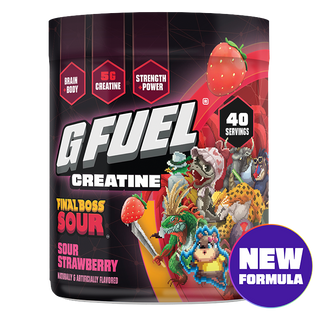


Creatine and pre-workout supplements are not the same thing, and confusing them leads to either doubling up on ingredients you do not need or missing out on benefits you should be getting. Creatine is a single compound that builds intramuscular energy reserves over weeks of daily supplementation. A pre-workout is a multi-ingredient formula designed to produce an immediate boost in energy, focus, and endurance for a single training session.
The simplest way to think about it: creatine is an investment that pays off over time. Pre-workout is a performance loan that pays off right now. Both work. Both are well-studied. And for most athletes, gamers, and active adults, taking both is the strongest approach because they operate through completely different mechanisms and complement each other without interference.
The full guide below breaks down exactly how each one works, what each one is best at, where the overlap happens, and whether you should take one, the other, or both.
How Creatine Works
Creatine is a naturally occurring compound made from three amino acids (arginine, glycine, and methionine). Your body produces some, and you consume the rest through meat, fish, and dairy. Supplementing with creatine monohydrate increases intramuscular phosphocreatine stores, which your muscles use to regenerate ATP (adenosine triphosphate) during short, explosive efforts.
The key distinction: creatine does not work acutely. Taking 5 grams of creatine before a workout will not change how that workout feels. Creatine works through saturation. Daily supplementation of 3 to 5 grams over 3 to 4 weeks fills your muscle stores, and the performance benefits (more reps, heavier lifts, faster recovery between sets) emerge once saturation is reached.
Creatine has no stimulant properties. You will not feel more awake, more focused, or more motivated from creatine. The benefit is cellular: deeper energy reserves for the moments when your muscles are under maximal load.
How Pre-Workout Works
A pre-workout supplement is a multi-ingredient formula designed to be taken 15 to 45 minutes before exercise. The goal is an immediate performance boost through ingredients that affect the central nervous system, blood flow, and perceived effort.
Common pre-workout ingredients include caffeine (the primary stimulant, typically 150 to 300mg per serving), L-citrulline (supports nitric oxide production and blood flow), beta-alanine (buffers lactic acid, producing the tingling sensation many users associate with pre-workouts), L-theanine (smooths the caffeine response and reduces jitters), and B-vitamins (support cellular energy metabolism).
Pre-workout works acutely. You feel the effects within 15 to 45 minutes of consumption, and they last 2 to 4 hours depending on the formula and your caffeine tolerance. Unlike creatine, pre-workout does not require days or weeks of loading. The benefit is immediate and session-specific.
A scoop of Energy Formula at 140mg caffeine, focus aminos, and zero sugar functions as a clean pre-workout alternative for athletes, gamers, and students who want the alertness and focus benefits without the high-stimulant loads (250mg+ caffeine) and artificial ingredient stacks many traditional pre-workouts carry. Our full comparison of pre-workout vs energy drink covers format differences in detail.
Creatine vs Pre-Workout: Key Differences
Mechanism
Creatine works at the cellular level by increasing ATP recycling capacity in muscles and brain. Pre-workout works at the nervous system level by increasing alertness, reducing perceived effort, and enhancing blood flow.
Timing
Creatine is taken daily, at any time, regardless of whether you train that day. Pre-workout is taken 15 to 45 minutes before a specific session and is not needed on rest days.
Speed of Effect
Creatine requires 3 to 4 weeks of daily dosing to reach full effect (or 5 to 7 days with a loading phase). Pre-workout delivers effects within 15 to 45 minutes of consumption.
What You Feel
Creatine produces no perceptible sensation. The benefit is invisible until you perform under load. Pre-workout produces a noticeable increase in alertness, energy, and sometimes a tingling sensation (from beta-alanine).
Duration of Benefit
Creatine's benefits persist as long as daily supplementation continues. Stop taking creatine and muscle stores gradually deplete over 4 to 6 weeks. Pre-workout's benefits last 2 to 4 hours per dose and do not carry over to the next day.
Cost
Creatine monohydrate is one of the cheapest supplements available, typically $0.05 to $0.15 per serving. Pre-workout formulas range from $0.75 to $2.00 per serving depending on ingredient quality and brand. A 40-serving Energy Formula tub sits at roughly $0.89 per serving, competitive with pre-workouts while offering a cleaner ingredient profile for daily use.
Should You Take Creatine, Pre-Workout, or Both?
Take Creatine If
You train consistently (3+ times per week) and want long-term strength, power, and recovery benefits that compound over months. You want cognitive support during long focus sessions. You prefer a no-stimulant supplement that does not affect sleep regardless of when you take it.
Take Pre-Workout If
You need an immediate energy and focus boost for a specific session. You train sporadically and want session-by-session performance enhancement. You respond well to caffeine and want the motivational push that creatine does not provide.
Take Both If
You want the strongest possible approach. Creatine builds the cellular foundation (deeper ATP reserves, faster recovery, long-term strength gains). Pre-workout or an energy formula handles the session-specific needs (alertness, focus, motivation, reduced perceived effort). The two do not interfere with each other at standard doses.
Research has not found meaningful negative interaction between caffeine and creatine when taken together. Some older studies raised the concern, but the ISSN's position update did not support it at standard supplementation levels. You can take creatine and an Energy Formula in the same shake without issues.
What About Creatine Inside Pre-Workout Formulas?
Many pre-workout products include creatine in their ingredient lists. The problem: most include 1 to 3 grams per serving, which is below the effective daily dose of 3 to 5 grams. If you rely on a pre-workout for your creatine, you may be under-dosing, and on rest days when you skip the pre-workout, you are getting zero creatine, which disrupts the saturation process.
The better approach is to supplement creatine separately at a consistent 3 to 5 grams per day, every day, regardless of whether you take a pre-workout that day. Treat creatine as its own line item in your daily routine, not as a bonus ingredient inside another product.
How Creatine and Pre-Workout Fit into a Full Stack
A complete supplementation routine for athletes and active gamers covers four pillars.
Energy and focus: a clean pre-workout or Energy Formula before training or a long session. Handles alertness, motivation, and perceived effort.
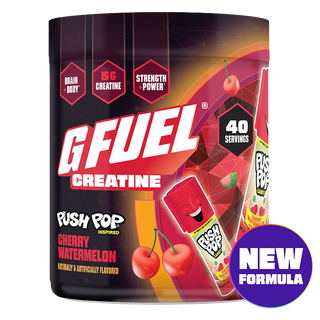
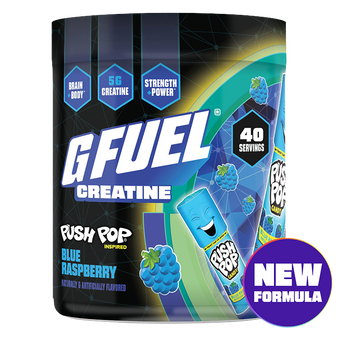
Cellular fuel: creatine monohydrate at 3 to 5 grams daily. Handles ATP recycling, strength, and long-term recovery.
Hydration: a caffeine-free Hydration Formula during or after sessions. Handles electrolyte balance and fluid retention.
Recovery: adequate protein (1.6 to 2.2 grams per kilogram daily) from food and supplements like Energy + Protein. Handles muscle repair and growth.
Creatine occupies a unique position in this stack because it is the only supplement that requires zero timing precision. Take it whenever you remember, every day, and it works. Everything else in the stack benefits from strategic timing.
Pick the Right Tool for the Job
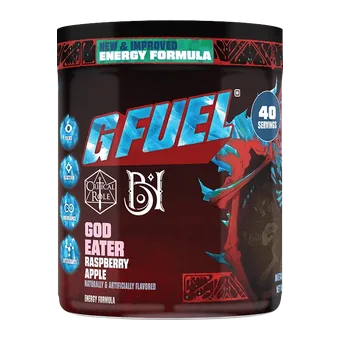
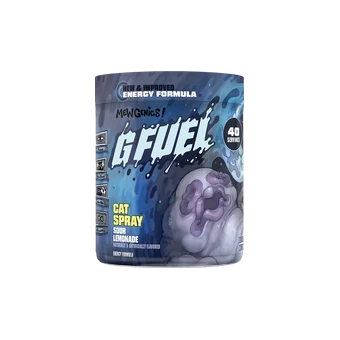
Creatine and pre-workout solve different problems, and the best results come from using both. Creatine builds the engine. Pre-workout fires the ignition. Our guide on the best energy drink powders covers how clean pre-workout alternatives compare to traditional formulas. Stack them, stay consistent, and let the compound effect of daily creatine and session-specific energy carry your performance forward. Keep a classic flavor in the rotation and rotate in a new arrival when the routine starts to feel stale.
Frequently Asked Questions
Q. Is creatine the same as pre-workout?
No. Creatine is a single compound that builds intramuscular energy reserves over weeks of daily use. Pre-workout is a multi-ingredient formula that delivers an immediate energy and focus boost for a single session. The two work through different mechanisms and serve different purposes.
Q. Can you take creatine and pre-workout together?
Yes. Research has not found meaningful interference between creatine and caffeine (the primary pre-workout ingredient) at standard doses. Taking both covers the cellular energy side (creatine) and the neurological focus side (pre-workout) of performance.
Q. Does creatine give you energy like pre-workout?
No. Creatine provides cellular energy (ATP recycling in muscles and brain) that you cannot feel as a stimulant effect. Pre-workout provides felt energy (increased alertness, motivation, reduced perceived effort) through caffeine and other stimulants. The two types of energy are complementary, not interchangeable.
Q. Should I take creatine on rest days?
Yes. Creatine works through daily saturation, not acute dosing. Skipping rest days disrupts the saturation process. Pre-workout, by contrast, is only taken before training sessions and is not needed on rest days.
Q. Is pre-workout bad for you?
Quality pre-workout formulas at recommended doses are safe for most healthy adults. The primary risk comes from high-caffeine formulas (300mg+) that approach or exceed the FDA's 400mg daily ceiling when combined with coffee or other caffeine sources. Choose formulas with transparent labels and stay under 400mg total caffeine per day.
Q. How much creatine is in a typical pre-workout?
Most pre-workouts include 1 to 3 grams of creatine per serving, which is below the effective daily dose of 3 to 5 grams. Supplementing creatine separately at the full recommended dose is more reliable than depending on a pre-workout for your creatine intake.